


Vegetable tanned leather has existed for a long time, and no one can deny its importance nowadays, as many tools, accessories, and wearables are made from it. Leather dates back almost 5,000 years, and over the years, the leather-making process has been refined in different eras. There are two main processes through which leather is made: vegetable tanning and Chrome tanning.
What is Vegetable Tanned Leather?
Vegetable-tanned leather is produced by the process of vegetable tanning, which changes animal hides into leather. Vegetable tanning is the process in which tannins from plant-based materials convert animal hides into leather by changing the structures of proteins present in the hides. The leather produced in such a manner is called vegetable-tanned leather.
An Overview of the Process of Manufacturing Vegetable Tanned Leather
Tanning is one of the sub-processes of the leather-making process. Leather making is a complicated process that starts with curing, which is the application of salts to the animal hides. After that, the hides are treated in a lime solution and then de-limed. After all these processes comes vegetable tanning. It’s a lengthy process that takes 60 days.
Detailed Process of Leather Making
Here is a brief overview of the leather-making process, including vegetable tanning. This will help you better understand the overall process of leather-making and familiarise you with vegetable tanning, too.
Curing and Pre-Tanning
The first step involved in the leather-making process and its base is collecting animal hides. Mostly, the hides that are used nowadays for the sake of making leather are obtained from the meat industry. Leather is a by-product of the meat industry.
- The hide obtained is first cured. The curing process involves taking the hide and applying salts on it or dipping it in the brine solution. This helps prevent the hide from decomposing. The curing process needs to be performed within some hours.
- The next step is called pre-tanning. In this step, any unwanted substances, such as hair, are removed from the hide. For liming purposes, a solution of hydrated lime and sodium sulfide is used. This helps to remove any hair from the hide and dissolve any young cells. The hides are soaked in the said solution for quite some time, which makes them heavier.
- The next part is de-liming the hides. This is done by washing the hides with water and then treating them with acid and acid salts. All these steps make the leather ready for tanning.
Tanning
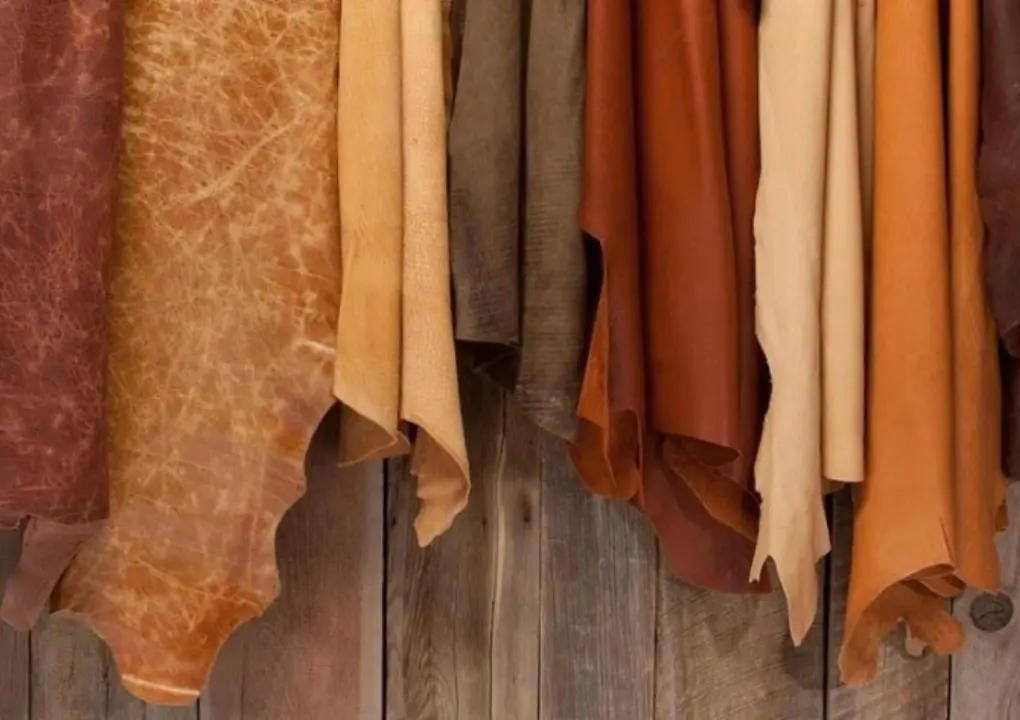
Now comes the process of tanning the leather. We will talk about vegetable tanning. It is an extensive process that consists of soaking the hides in drums filled with vegetable tanning agents. Vegetable tannins are used for vegetable tanning, and these tannins are extracted from plant-based materials such as bark, leaves, and fruits. The pre-tanned limes are soaked in vegetable tannin solution for 60 days. This process converts the raw hide into leather.
Treatment
In this process, the freshly converted leather is applied with lubricants and oils that help make the leather shine and appear the way you see it on the shelves. Treatment helps to preserve leather for a long time and helps to make it stronger.
Other Way of Tanning Leather
The evidence of leather exists in ancient societies, too. At the beginning of leather production, vegetable tanning was the only method to tan the hides and convert them into leather. In the mid of the 19th century, a sudden increase in the demand for leather raised the need for a new tanning method that didn’t take two months to complete.
Chrome Tanning
The evidence of leather exists in ancient societies, too. At the beginning of leather production, vegetable tanning was the only method to tan the hides and convert them into leather. In the mid of the 19th century, a sudden increase in the demand for leather raised the need for a new tanning method that didn’t take two months to complete.
Chrome Leather Tanning vs Vegetable Tanned Leather
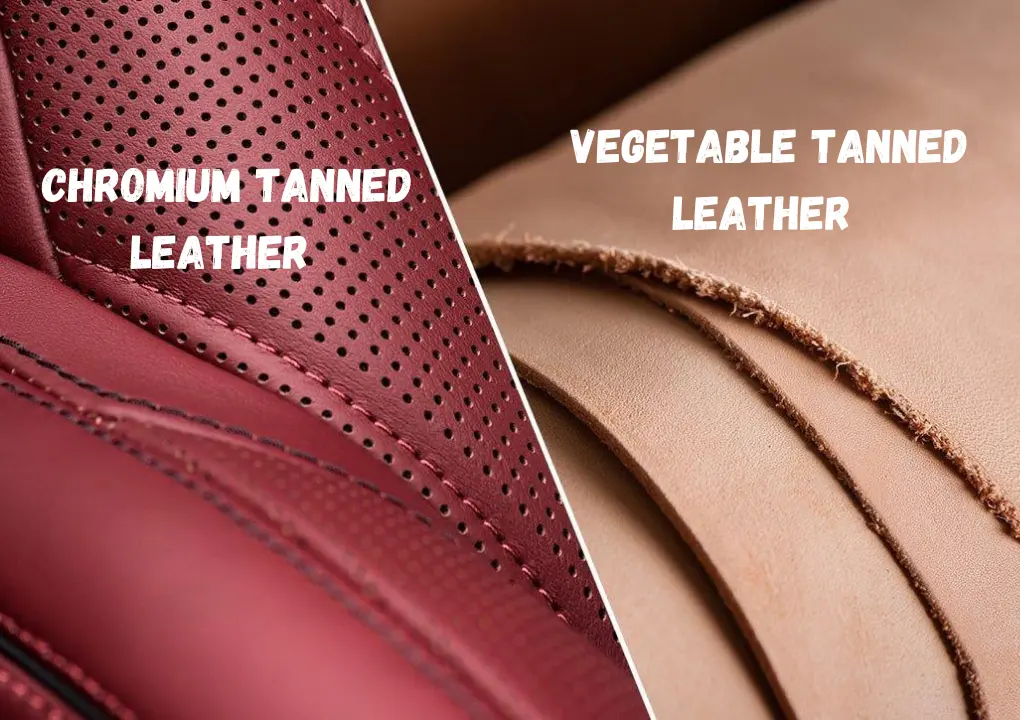
Overall, vegetable leather tanning is the best method for tanning leather. This is due to a variety of reasons. However, the leather produced through both tanning methods is good, and you can choose either.

Pros of Vegetable Tanned Leather
Here are the pros of vegetable tanned leather: This type of leather has the smell of leather we are all familiar with and love. Vegetable-tanned leather has overall better quality and texture. Vegetable-tanned leather has a deeper and more infused colour; whether it is black or brown, the colour seems richer and deeper in vegetable-tanned leather. Vegetable-tanned leather lasts longer, and its production is safer for the environment and healthier for humans.
Cons of Vegetable Tanned Leather
Well, there are not many cons of vegetable tanned leather. One of the biggest downsides of vegetable-tanned leather is that it takes too much time to produce. The other drawback is that untreated vegetable-tanned leather is weak against water.
Which one Should You Choose?
When it comes to choosing which leather to use, vegetable tanned leather is the clear winner. However, due to the amount of time this type of leather takes to be made, vegetable-tanned leather is way more expensive than chrome-tanned leather. Despite its price, the overall quality of this leather is better.
Conclusion
So, we overviewed the process of leather making, especially focusing on vegetable leather tanning. This helped us better understand how leather is made and which process an animal hide goes through before finally being converted into leather.
