


Leather is a premium material that has been produced for more than 5,000 years. It has long been used to make tools, accessories, and wearables of the finest quality. Although created at such a large scale, many need to be made aware of the process through which leather is made. Let’s discuss thoroughly how is leather made.
Raw Material Stage
This is the stage where the raw material is gathered and processed initially to prepare it for tanning, the most crucial step in leather making. This is the first stage of how is leather made.
Obtaining Hides
Leather is made from animal hides. The hides can be of any animal, but cowhides are mostly used. Other commonly used hides are sheep, goat, pig, and crocodile hides.
The hides are obtained mainly from the dairy and meat industries, so leather is a by-product of these industries.
These hides need to be removed from the animal. For this, a flesher is used, or you can remove the hide manually. This process needs to be done quickly because the hides start to decompose within a few hours and are delicate.
Also, this process must be performed carefully because if not done with care, the hide can be damaged, lowering the leather yield.
Salting
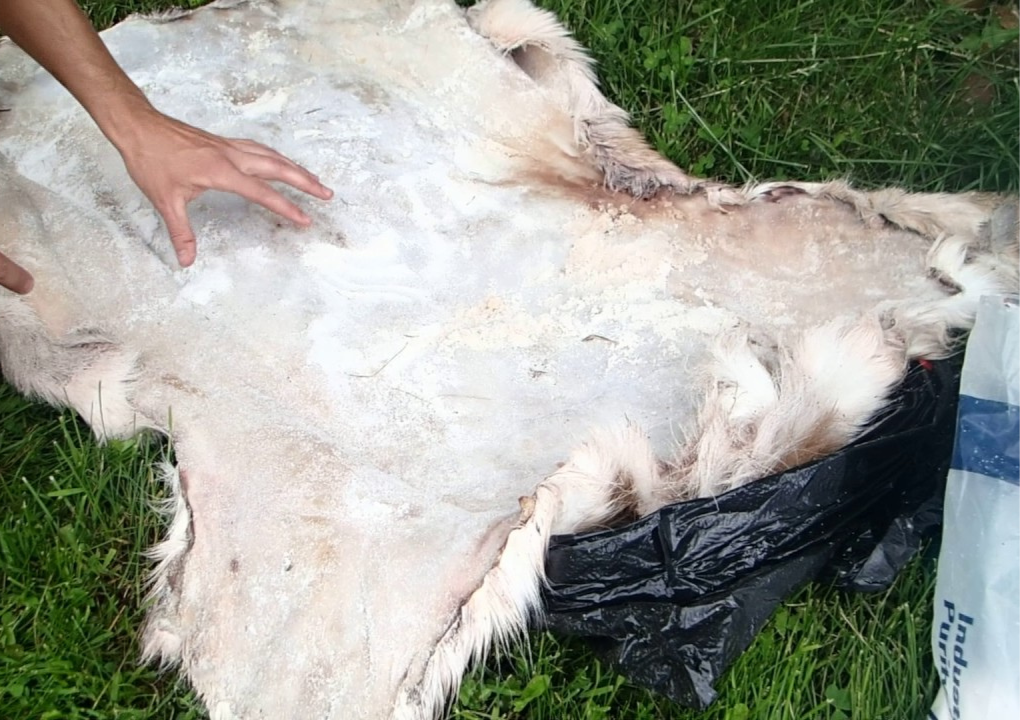
This is an extremely necessary process that prevents the hides from decomposing. In this process, the hide that has been removed from the animal is salted thoroughly, dipped in brine solution, or frozen.
This helps to preserve the hide, which can start to decompose pretty quickly.
Removing Impurities
Animal hides have hairs on them. Some don’t, but most of them have hair and other impurities. To remove them, we need the help of liming. The hides are soaked for about two days in lime milk.
This removes any hairs from the hides and also kills off any proteins so the leather becomes pure of any unwanted material. The hide also swells and gets almost double in thickness and shrinks in length in this stage.
Splicing
As the hide has swelled and doubled in thickness, it can be spliced into two parts. This gives us two parts. The quality of both parts varies, with the upper part generally being of higher quality and being used as fine-grade leather.
Tanning Stage
This is the stage that converts hide into leather and is one of the biggest steps involved in the leather-making process.
The leather is soaked in tanning solutions, which strip off all the proteins from the leather and preserve the hide from decomposing. This is the second stage of how is leather made.
Vegetable Tanning
Vegetable tanning is the tanning process performed from natural tannins obtained from plant-based materials such as tree bark and leaves. The hides are soaked in vegetable tanning solution for 60 days. The leather produced by vegetable tanning is flexible.
Chrome Tanning
Chrome tanning was invented in the mid-19th century to produce leather faster than vegetable tanning, which took many days.
Chromium salts are used for this type of tanning, and the leather is made within a day or two. The leather produced is soft and is used to make clothes and wearables.

Liquoring
Towards the end of tanning, special fats are added to the newly converted leather to help increase its strength and softness. This process is called liquoring. It is a crucial step of how is leather made.
Moisture Removal
At this point, the leather has taken in too much excess water and moisture, which needs to be removed. This is done by passing the leather through a pressure roller, which helps to remove all the moisture from the hides.
Shaving
After tanning, the leather is inspected. Any damaged parts are shaved away. To make the width of the leather uniform, all over the leather is shaved thoroughly.
The shaved parts are used to make tools and other accessories, and if they are not usable, they are sent for recycled leather.
Re-Tanning Stage

If needed, the leather is tanned again to prepare it completely. The re-tanning process is similar to the tanning process, with no differences. Depending on the process, the leather is either vegetable-tanned or chrome-tanned. This is the fourth stage of how is leather made.
Drying
After re-tanning, the leather needs to be dried again. This is performed using vacuum drying. In vacuum drying, all the air inside the leather is sucked, which strips any excess moisture from the leather. At this stage, a bleaching mix is added to the leather, which makes the leather ready for dyeing.
This is the last step of how is leather made before the finishing process.

Finishing
Now that the leather is dyed comes the time to finish preparing the leather for the purpose of being sent to produce goods from it.
The finishing process is simple, and the purpose is to make leather as soft and strong as possible. Before the finishing process, the leather is called naked leather. This is the final stage of how is leather made.
Dyeing Leather
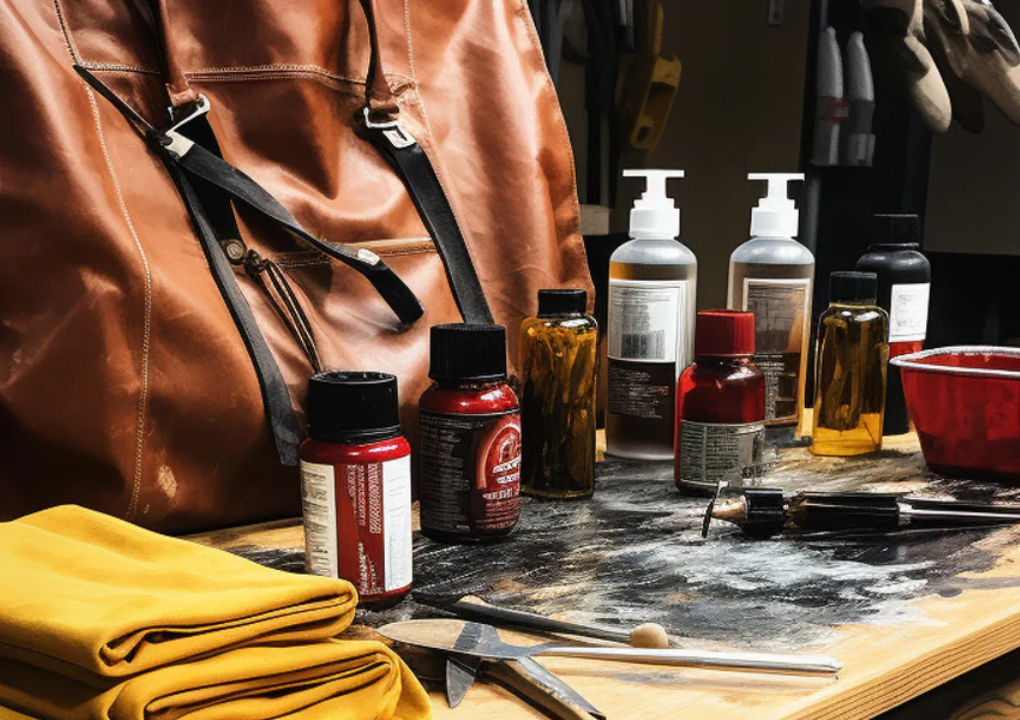
The leather is dyed after tanning. The dyeing process needs to be performed with extreme precision and care, as a little hiccup can ruin the look of the leather.
Vegetable-tanned leather gets a deep black and brown colour. Chrome-tanned leather can be dyed in a variety of colours. This is the fifth stage of how is leather made.
Passing Through Staker
The second last step of how leather is made in which leather is passed through a machine known as a stalker, which softens it. The machine then stretches the leather, adding a combination of oils, giving it the glossy finish you see.
Spraying
To achieve the desired gloss and finish, the leather is sprayed with various chemicals. For example, leather can be sprayed with mother of pearls for a pearlescent finish. This is the last step in how is leather made.
Conclusion
So, we overviewed the process of how is leather made in detail, from obtaining raw materials, tanning, re-tanning, dyeing and finishing. We discussed everything about how is leather made in detail so that you know more about leather making.
